Cybersecurity Threats in 2026: Federal Agencies Warn on State Attacks
Advertisements
Federal agencies are issuing stark warnings regarding escalating Cybersecurity Threats in 2026: Federal Agencies Issue New Warnings on State-Sponsored Attacks. This report delves into the critical details, providing expert insights and actionable intelligence for safeguarding digital assets against sophisticated adversaries.
The landscape of cyber warfare is rapidly evolving, with federal agencies now issuing urgent warnings about burgeoning Cybersecurity Threats in 2026: Federal Agencies Issue New Warnings on State-Sponsored Attacks. These alerts underscore a critical inflection point, demanding immediate attention and robust defensive strategies across public and private sectors.
This comprehensive overview aims to dissect the current intelligence, highlight the implications of these state-sponsored attacks, and outline the proactive measures essential for national security and economic stability. Understanding the nuances of these threats is paramount for every organization and individual operating within the digital realm.
The federal government’s pronouncements are not mere predictions but are based on actionable intelligence and observed trends from ongoing cyber campaigns. Experts emphasize that the nature of these attacks is becoming more aggressive, targeted, and disruptive, making preparedness a non-negotiable imperative.
Escalating Landscape of State-Sponsored Cyber Attacks
Federal agencies, including the Cybersecurity and Infrastructure Security Agency (CISA) and the National Security Agency (NSA), have unequivocally stated that the intensity and sophistication of state-sponsored cyber attacks are set to reach unprecedented levels by 2026.
These warnings are grounded in a growing body of evidence, including recent breaches and intelligence assessments that reveal adversaries are investing heavily in advanced persistent threats (APTs) and zero-day exploits.
The focus of these state actors extends beyond traditional espionage, now encompassing critical infrastructure disruption, intellectual property theft, and widespread disinformation campaigns designed to destabilize national interests.
Key Adversaries and Their Evolving Tactics
Intelligence reports frequently highlight specific nation-states as primary perpetrators, though official statements often refer to them broadly as sophisticated persistent threat actors. These groups are known for their patience, resourcefulness, and ability to exploit even the most minute vulnerabilities.
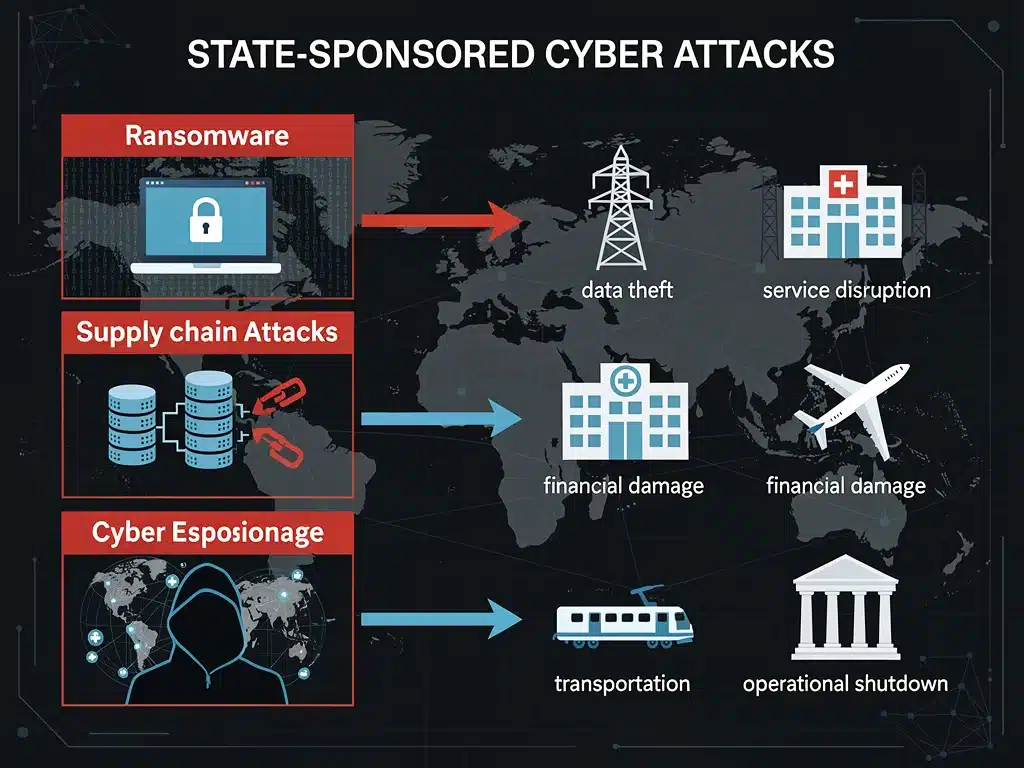
Their tactics include highly customized spear-phishing campaigns, supply chain compromises, and the deployment of advanced malware capable of evading traditional detection systems. The aim is often to establish long-term footholds within target networks for future exploitation.
- Ransomware-as-a-Service (RaaS) Adoption: State actors increasingly leverage RaaS models, obscuring their origins and maximizing impact.
- Supply Chain Infiltration: Compromising trusted software vendors to inject malicious code into widely used products.
- Disinformation Campaigns: Utilizing cyber tools to spread false narratives and undermine public trust.
- Critical Infrastructure Targeting: Focusing on energy grids, water treatment facilities, and transportation networks for potential disruption.
The convergence of geopolitical tensions and technological advancements fuels this escalating cyber arms race, making the warnings about Cybersecurity Threats in 2026: Federal Agencies Issue New Warnings on State-Sponsored Attacks increasingly urgent.
Impact on Critical Infrastructure and National Security
The new warnings specifically highlight the immense risk to critical infrastructure sectors, which are the backbone of modern society. A successful attack on these systems could lead to widespread societal disruption, economic collapse, and even loss of life.
Federal agencies are particularly concerned about the potential for cascading failures, where a breach in one sector could trigger significant problems in interconnected systems, amplifying the overall damage.
The integrity of national security systems, including defense networks and government communications, is also under constant assault, posing a direct threat to the nation’s ability to respond to crises effectively.
Protecting Essential Services from Cyber Infiltration
Cybersecurity experts emphasize that critical infrastructure operators must adopt a “assume breach” mentality, constantly evaluating their defenses and preparing for the inevitability of an attack. This involves implementing multi-layered security protocols and fostering a culture of cybersecurity awareness.
The federal government is collaborating with private sector partners to share threat intelligence and develop joint response strategies, recognizing that a unified front is essential against these sophisticated adversaries.
These efforts aim to enhance resilience and ensure that essential services can continue to operate even under sustained cyber attack. The warnings about Cybersecurity Threats in 2026: Federal Agencies Issue New Warnings on State-Sponsored Attacks serve as a stark reminder of this ongoing vulnerability.
Federal Agencies’ New Directives and Recommendations
In response to the heightened threat landscape, federal agencies are not merely issuing warnings but are also rolling out new directives and updated recommendations for both government entities and private sector organizations.
These guidelines emphasize a proactive approach to cybersecurity, moving beyond reactive defense to embrace predictive analytics, threat hunting, and continuous vulnerability management.
The goal is to establish a baseline of robust security practices that can withstand the evolving tactics of state-sponsored actors, ensuring a stronger national cyber posture against future Cybersecurity Threats in 2026: Federal Agencies Issue New Warnings on State-Sponsored Attacks.
Implementing Zero Trust Architectures
A cornerstone of the new federal guidance is the widespread adoption of Zero Trust security models. This paradigm dictates that no user, device, or application should be inherently trusted, regardless of its location within the network perimeter.
Instead, every access attempt must be verified, authenticated, and authorized based on strict policies. This significantly reduces the attack surface and limits lateral movement for attackers who manage to breach initial defenses.
- Mandatory Multi-Factor Authentication (MFA): Enforcing MFA for all access points to prevent unauthorized entry.
- Micro-segmentation: Dividing networks into smaller, isolated segments to contain breaches.
- Continuous Monitoring: Real-time surveillance of network activity for anomalous behavior.
- Automated Response: Implementing automated systems to detect and mitigate threats rapidly.
These measures are critical for federal systems and are strongly recommended for private companies, particularly those involved in critical sectors or holding sensitive data. The emphasis is on building layers of defense to mitigate the risks posed by sophisticated adversaries.
The Role of Intelligence Sharing and Public-Private Partnerships
A crucial element in combating the escalating Cybersecurity Threats in 2026: Federal Agencies Issue New Warnings on State-Sponsored Attacks is enhanced intelligence sharing between government agencies and the private sector.
Federal authorities recognize that they cannot tackle these complex threats alone; the vast majority of critical infrastructure is privately owned, necessitating close collaboration.
Initiatives are being strengthened to facilitate the rapid exchange of actionable threat intelligence, allowing organizations to proactively defend against emerging attack vectors.
Bridging the Gap: Collaborative Defense Strategies
Programs like CISA’s Joint Cyber Defense Collaborative (JCDC) are expanding their scope, bringing together federal agencies, critical infrastructure owners and operators, and cybersecurity companies. These partnerships aim to develop synchronized defensive strategies and coordinated responses to significant cyber incidents.
The emphasis is on creating a unified operational picture, enabling all stakeholders to understand the threat landscape in real-time and deploy countermeasures effectively. This collaborative model is vital for addressing the scale and complexity of state-sponsored threats.
These partnerships are not just about sharing information; they are about building a collective defense mechanism that leverages the unique strengths and resources of both public and private entities.
Technological Advancements in Cyber Defense
The fight against Cybersecurity Threats in 2026: Federal Agencies Issue New Warnings on State-Sponsored Attacks is also being driven by significant advancements in cyber defense technologies. Innovation is critical to staying ahead of adversaries who are constantly refining their attack methodologies.
Federal agencies and private sector security firms are investing heavily in technologies such as Artificial Intelligence (AI) and Machine Learning (ML) to enhance threat detection, automate responses, and predict future attack patterns.
These technologies are moving beyond simple signature-based detection to behavioral analysis, allowing for the identification of novel and sophisticated threats that would otherwise go unnoticed.
Leveraging AI and Machine Learning for Proactive Security
AI and ML algorithms can analyze vast quantities of network data in real-time, identifying subtle anomalies and suspicious activities that indicate a potential breach. This allows for much faster detection and response times, minimizing the impact of an attack.
Furthermore, these systems can learn from past incidents, continuously improving their ability to identify and neutralize threats. This proactive capability is becoming indispensable in the face of rapidly evolving state-sponsored tactics.
- Threat Intelligence Platforms: AI-driven platforms aggregate and analyze global threat data to provide predictive insights.
- Automated Incident Response: AI-powered tools can automatically quarantine infected systems and block malicious traffic.
- Behavioral Analytics: ML models establish normal user and system behavior to flag deviations indicative of compromise.
- Vulnerability Prioritization: AI helps identify and prioritize the most critical vulnerabilities for patching based on potential impact.
The integration of advanced analytics and automation is transforming cyber defense from a reactive posture to a more predictive and resilient one, crucial for countering the Cybersecurity Threats in 2026: Federal Agencies Issue New Warnings on State-Sponsored Attacks.
Preparing Your Organization for 2026 and Beyond
Given the urgent warnings about Cybersecurity Threats in 2026: Federal Agencies Issue New Warnings on State-Sponsored Attacks, every organization, regardless of size or sector, must re-evaluate and strengthen its cybersecurity posture. Complacency is no longer an option.
This preparation involves not just technological upgrades but also a comprehensive review of policies, processes, and personnel training. A holistic approach is essential to build true cyber resilience.
Organizations must understand that cybersecurity is a continuous journey, requiring ongoing investment and adaptation to stay ahead of sophisticated and well-resourced adversaries.
Actionable Steps for Enhanced Cyber Resilience
Start by conducting thorough risk assessments to identify critical assets and potential vulnerabilities. Develop and regularly test incident response plans to ensure a swift and effective reaction to a breach. Employee training is also paramount, as human error remains a significant vulnerability.
Implement strong access controls, patch management, and data encryption. Consider engaging with third-party cybersecurity experts for penetration testing and security audits to gain an objective assessment of your defenses.
The federal warnings are a call to action for all stakeholders. Proactive investment in cybersecurity now will undoubtedly mitigate future risks and protect against the severe consequences of successful state-sponsored attacks.

The Human Element: Training and Awareness
While technological solutions are vital, the human element remains the weakest link in many cybersecurity defenses. State-sponsored attackers frequently exploit human vulnerabilities through social engineering tactics, making comprehensive training and awareness programs indispensable.
Federal agencies consistently emphasize that even the most advanced security systems can be bypassed if employees are not vigilant and educated about common attack vectors. A well-informed workforce acts as an additional layer of defense.
Investing in regular, engaging cybersecurity training can significantly reduce the risk of successful phishing attacks, malware infections, and other forms of cyber intrusion, especially against the backdrop of heightened Cybersecurity Threats in 2026: Federal Agencies Issue New Warnings on State-Sponsored Attacks.
Cultivating a Security-Conscious Culture
Effective training goes beyond basic awareness; it instills a security-conscious culture where every employee understands their role in protecting organizational assets. This includes recognizing suspicious emails, reporting unusual activities, and adhering to strong password policies.
Simulated phishing exercises and regular updates on emerging threats keep employees informed and prepared. Leadership commitment to cybersecurity is also crucial, setting the tone for the entire organization.
By empowering employees with knowledge and best practices, organizations can transform potential vulnerabilities into a formidable first line of defense against sophisticated state-sponsored cyber threats.
Legal and Policy Frameworks for Cyber Defense
The escalating nature of Cybersecurity Threats in 2026: Federal Agencies Issue New Warnings on State-Sponsored Attacks also necessitates robust legal and policy frameworks. Governments worldwide are grappling with how to effectively deter, detect, and prosecute state-sponsored cyber activity.
In the United States, efforts are underway to strengthen existing cyber laws, clarify attribution processes, and establish clearer international norms for responsible state behavior in cyberspace.
These policy initiatives aim to provide a stronger legal basis for defensive actions and to impose consequences on nations that engage in malicious cyber activities, thereby fostering a more stable and secure digital environment.
International Cooperation and Cyber Diplomacy
Given the borderless nature of cyber attacks, international cooperation is paramount. Federal agencies are actively engaged in cyber diplomacy, working with allies to share intelligence, coordinate responses, and build a common understanding of cyber threats.
Agreements on cyber warfare conduct and mutual assistance treaties are crucial for establishing a framework for collective defense. These diplomatic efforts are as important as technological advancements in mitigating global cyber risks.
The development of shared legal standards and enforcement mechanisms is fundamental to deterring state-sponsored aggression in cyberspace and protecting against future Cybersecurity Threats in 2026: Federal Agencies Issue New Warnings on State-Sponsored Attacks.
Economic Implications of Advanced Cyber Attacks
The financial ramifications of sophisticated cyber attacks, particularly those launched by state-sponsored actors, are immense. Beyond direct costs of remediation and recovery, there are significant indirect economic impacts that can cripple businesses and national economies.
Loss of intellectual property, disruption of supply chains, and erosion of consumer trust can have long-lasting effects, impacting innovation, competitiveness, and global trade. The warnings about Cybersecurity Threats in 2026: Federal Agencies Issue New Warnings on State-Sponsored Attacks underscore these profound economic risks.
Small and medium-sized businesses (SMBs), often lacking the resources of larger enterprises, are particularly vulnerable and can face existential threats from even a single successful breach.
Protecting Economic Stability and Business Continuity
To safeguard economic stability, both federal agencies and industry leaders are advocating for increased investment in cybersecurity infrastructure and insurance. Businesses are encouraged to develop comprehensive business continuity and disaster recovery plans to minimize downtime and financial losses in the event of an attack.
The economic cost of inaction far outweighs the investment required for robust cybersecurity measures. Protecting digital assets is no longer just an IT concern but a fundamental business imperative.
By proactively addressing the warnings about Cybersecurity Threats in 2026: Federal Agencies Issue New Warnings on State-Sponsored Attacks, businesses can not only protect their bottom line but also contribute to the broader economic resilience of the nation.
| Key Point | Brief Description |
|---|---|
| Escalating Threats | Federal agencies warn of unprecedented state-sponsored cyber attack sophistication by 2026. |
| Critical Infrastructure | Essential services face significant risk of disruption and cascading failures from cyber attacks. |
| Proactive Defense | New directives emphasize Zero Trust, AI, and public-private partnerships for enhanced resilience. |
| Human Element | Employee training and security awareness are critical to counter social engineering tactics. |
Frequently Asked Questions About Cybersecurity Threats in 2026
Federal agencies are primarily concerned about the escalating sophistication and frequency of state-sponsored cyber attacks. These threats increasingly target critical infrastructure, aiming for disruption, espionage, and intellectual property theft, with potential for widespread economic and societal impact.
Critical infrastructure sectors like energy, water, healthcare, finance, and transportation are highly vulnerable. Additionally, defense contractors, government agencies, and technology companies holding sensitive data or intellectual property are prime targets for sophisticated state-sponsored adversaries.
Agencies recommend adopting Zero Trust architectures, implementing multi-factor authentication, enhancing intelligence sharing, and leveraging advanced technologies like AI and ML for proactive threat detection and response. Comprehensive employee training and incident response planning are also crucial.
Businesses should conduct regular risk assessments, develop robust incident response plans, invest in advanced security technologies, and prioritize employee cybersecurity training. Engaging in public-private partnerships for threat intelligence sharing is also highly beneficial for enhanced preparedness.
International cooperation is vital for sharing threat intelligence, coordinating defensive strategies, and establishing global norms for responsible state behavior in cyberspace. Cyber diplomacy and mutual assistance agreements are essential for a collective defense against cross-border state-sponsored attacks.
What This Means for the Future
The urgent warnings from federal agencies regarding Cybersecurity Threats in 2026: Federal Agencies Issue New Warnings on State-Sponsored Attacks signal a new era of cyber warfare. This is not merely a technical challenge but a strategic imperative that demands a unified, comprehensive response from government, industry, and individuals. Proactive measures, continuous adaptation, and strong public-private partnerships will be the bedrock of national cyber resilience.
The landscape of cyber threats will continue to evolve, making ongoing vigilance and investment in cybersecurity non-negotiable. Understanding these warnings and acting decisively now will be critical for safeguarding our digital future and protecting against the profound impacts of state-sponsored aggression.