Housing Assistance Programs 2026: Section 8 and Rental Aid
Advertisements
Federal housing policy shifts and updated local funding frameworks are redefining rental assistance operations across the United States.
As local housing authorities adjust voucher allocations, inspection standards, and income verification rules, understanding these core changes is essential for recipients and landlords alike. Here is a clear breakdown of key structural updates, eligibility factors, and administrative milestones to monitor.
Understanding the Landscape of Housing Assistance Programs 2026
The year 2026 marks a pivotal period for housing aid in the United States, with various programs designed to alleviate the burden of housing costs for vulnerable populations. These initiatives aim to ensure stable housing, which is fundamental to economic security and public health.
The scope of these programs extends beyond simple rent subsidies, encompassing a holistic approach to housing stability. They address a wide range of needs, from emergency assistance to long-term sustainable housing solutions.
Officials are emphasizing improved coordination between federal, state, and local entities to maximize the impact and reach of these critical services. The goal is to streamline access and reduce administrative hurdles for eligible individuals and families.
Section 8: The Cornerstone of Rental Aid
Section 8, formally known as the Housing Choice Voucher Program, remains a vital component of Housing Assistance Programs 2026. It enables low-income families, the elderly, and people with disabilities to afford decent, safe, and sanitary housing in the private market.
The program operates through local public housing agencies (PHAs) that receive federal funds from the U.S. Department of Housing and Urban Development (HUD). Participants typically pay 30% of their adjusted gross income for rent and utilities, with the voucher covering the difference.
Demand for Section 8 vouchers consistently outstrips availability, leading to long waiting lists in many jurisdictions. Updates for 2026 focus on potential expansions and operational efficiencies to serve more individuals.
Eligibility criteria for Section 8 are primarily based on income, typically 50% of the median income for the area.
Vouchers are portable, allowing recipients to move anywhere in the U.S. where a PHA administers the program.
Recent legislative discussions indicate potential adjustments to funding levels and program administration to address current housing crises.
PHAs play a critical role in managing the program, from determining eligibility to inspecting housing units. Their effectiveness directly impacts the success of Section 8 in local communities.
Other Key Rental Aid Initiatives
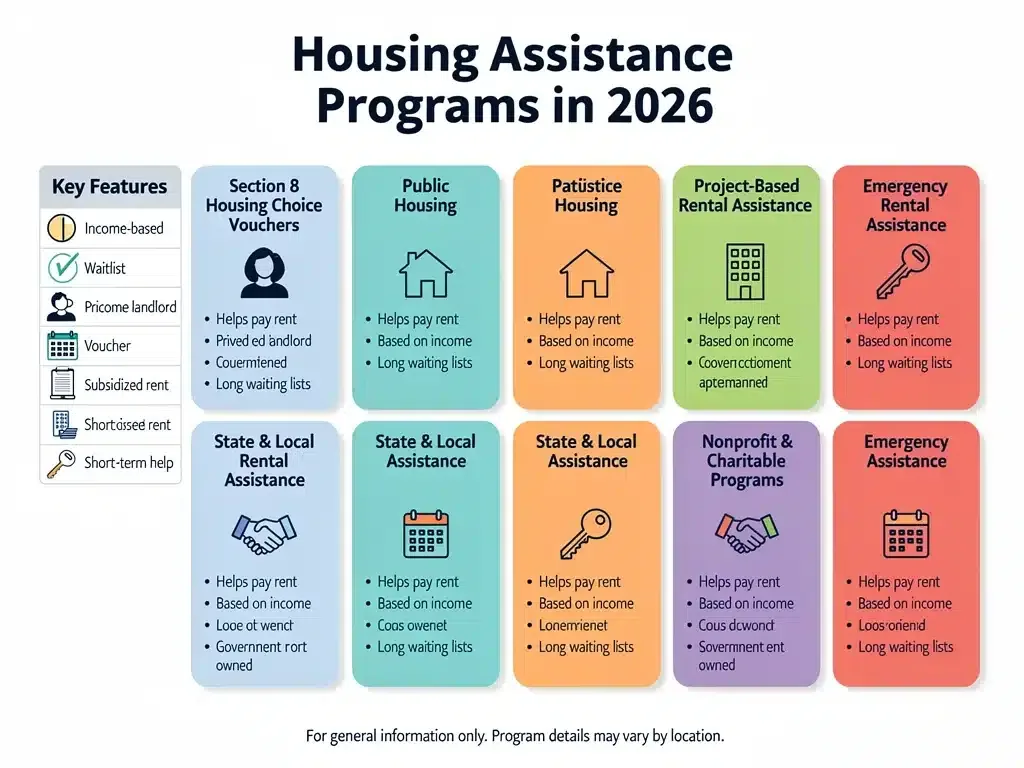
Beyond Section 8, several other rental assistance programs contribute to Housing Assistance Programs 2026. These include Public Housing, HOME Investment Partnerships Program, and various state and local initiatives tailored to specific community needs.
Public Housing provides affordable rental homes for low-income families, seniors, and people with disabilities, owned and managed by PHAs. While the construction of new public housing has slowed, existing units remain a crucial resource.
The HOME program provides grants to states and local governments to create affordable housing for low-income households. This can include rental housing, homeownership assistance, and rehabilitation of existing properties.
Many states and cities operate their own rental assistance programs, often funded through a combination of federal grants and local taxes. These programs can offer emergency rental assistance, rapid re-housing, and permanent supportive housing.
These diverse programs collectively form a safety net, addressing different facets of housing insecurity. The effectiveness of Housing Assistance Programs 2026 hinges on the seamless integration and accessibility of these varied options.
Eligibility and Application Process for Housing Assistance Programs 2026
Navigating the eligibility requirements and application processes for housing assistance can be complex, but understanding the general guidelines is the first step. Each program has specific criteria, primarily focused on income, family size, and citizenship status.
Applicants typically need to provide extensive documentation, including proof of income, household composition, and any disabilities. Thorough preparation of these documents can significantly expedite the application process.
Local housing authorities are the primary points of contact for most federal and local rental aid applications. They provide detailed information and often offer assistance in completing the necessary paperwork.
Income Requirements and Limitations
Income is the most significant factor in determining eligibility for most Housing Assistance Programs 2026. Federal programs like Section 8 typically define low-income as earning 50% or less of the area’s median income (AMI), with very low-income at 30% AMI.
These income limits are adjusted annually by HUD and vary significantly by geographic location. What qualifies as low-income in a rural area might not in a major metropolitan center.
Some programs also consider assets, such as savings accounts or property ownership, when determining eligibility. It is essential for applicants to disclose all financial information accurately.
Income verification often requires pay stubs, tax returns, and statements from other benefit programs.
Family size impacts the income limits; larger families typically have higher income thresholds.
Certain deductions, such as medical expenses for the elderly or disabled, can reduce an applicant’s adjusted gross income.
Understanding these specific income thresholds for your area is crucial before applying. Resources are often available online or through local PHAs to help calculate eligibility.
The Application Journey: From Waiting List to Home
Applying for Housing Assistance Programs 2026 typically begins with contacting your local PHA or relevant housing agency. Many programs operate on a waiting list basis due to high demand.
Waiting lists can extend for months or even years, especially for popular programs like Section 8. Some PHAs occasionally open their waiting lists for short periods, making it critical to stay informed.
Once an applicant reaches the top of the waiting list, they undergo a more detailed eligibility review, including background checks and interviews. This ensures compliance with program rules and verification of all submitted information.
After approval, recipients receive a voucher or are placed in an available unit, depending on the program. They then work with the PHA to find suitable housing that meets program standards and rent limits.
Impact and Reach: Over 5 Million Americans Served
The collective impact of Housing Assistance Programs 2026 is substantial, providing critical support to over 5 million Americans. These programs prevent homelessness, stabilize families, and contribute to the overall well-being of communities nationwide.
The beneficiaries represent a diverse cross-section of the American population, including working families, seniors living on fixed incomes, veterans, and individuals with disabilities. Their stories underscore the profound difference these programs make.
Beyond individual relief, housing assistance has broader economic benefits, reducing healthcare costs and improving educational outcomes for children. Stable housing is a foundation for societal progress.
Demographics of Beneficiaries
Analysis of current data indicates that families with children constitute a significant portion of those benefiting from Housing Assistance Programs 2026. These programs offer a lifeline, ensuring children have a stable environment for growth and learning.
Seniors and individuals with disabilities also represent a large segment of beneficiaries, relying on assistance to maintain independent living. The programs help them afford housing that meets their specific needs.
Veterans, often facing unique challenges in securing stable housing, are another key demographic served. Dedicated initiatives within broader housing assistance efforts aim to address veteran homelessness and housing insecurity.
Approximately 70% of households receiving federal rental assistance are headed by a person with a disability, are elderly, or are working families.
Racial and ethnic minorities are disproportionately represented among beneficiaries, reflecting historical and systemic housing inequalities.
The majority of assisted households earn extremely low incomes, often below 30% of the area median income.
Understanding these demographics helps policymakers tailor programs to better serve those most in need, ensuring equitable access to housing resources.
Success Stories and Challenges Ahead
Numerous success stories highlight how Housing Assistance Programs 2026 have transformed lives, enabling individuals to secure employment, pursue education, and improve their health. These narratives are powerful testaments to the programs’ effectiveness.
However, significant challenges persist, including chronic underfunding and the ever-growing demand for affordable housing. The gap between available assistance and the number of eligible households remains a pressing issue.
Policy discussions for 2026 often revolve around increasing funding, expanding program eligibility, and addressing zoning regulations that limit affordable housing development. These are complex issues requiring sustained political will.
The economic climate, including inflation and rising rental costs, further complicates the delivery of effective housing assistance. Programs must adapt to these evolving pressures to maintain their impact.
Legislative Outlook and Funding for 2026
The legislative landscape for Housing Assistance Programs 2026 is dynamic, with ongoing debates in Congress regarding budget allocations and policy reforms. Advocacy groups are actively pushing for increased funding to meet the escalating demand for affordable housing.
Future funding levels will significantly influence the number of families and individuals that can be served. Any changes in appropriations will have direct consequences on waiting lists and program capacity.
Policymakers are also exploring innovative approaches, such as public-private partnerships and incentives for developers to build more affordable units. These strategies aim to diversify funding sources and expand housing options.
Federal Budget Allocations
The federal budget for 2026 will determine the financial capacity of HUD and other agencies to administer Housing Assistance Programs 2026. Historically, these programs have faced constant pressure to secure adequate funding.
Advocates argue that investing in housing assistance is a cost-effective solution to homelessness, reducing expenses related to emergency services and healthcare. They emphasize the long-term societal benefits of stable housing.
The political climate, including upcoming elections, can heavily influence budget decisions. Housing remains a bipartisan concern, but the scale of investment often becomes a point of contention.
Key legislative proposals include expanding the number of Section 8 vouchers and increasing funding for homeless assistance grants.
Discussions are underway regarding the potential for new tax credits or incentives for affordable housing development.
The reauthorization of certain housing programs will be a critical legislative event in the lead-up to 2026.
Monitoring congressional hearings and legislative proposals is essential for understanding the future direction of housing assistance funding.
Policy Reforms and Innovations
Beyond funding, policy reforms are being considered to improve the efficiency and effectiveness of Housing Assistance Programs 2026. These reforms aim to address systemic issues and adapt to modern housing challenges.
One area of focus is reducing regulatory barriers that hinder the development of affordable housing. Streamlining permitting processes and encouraging inclusionary zoning are among the proposed solutions.
There’s also a growing interest in housing first models, which prioritize providing immediate housing without preconditions, followed by supportive services. This approach has shown promise in reducing chronic homelessness.
<br>

Technological advancements are also being explored to improve program administration, such as online application portals and data analytics to better identify and serve at-risk populations. These innovations could make Housing Assistance Programs 2026 more responsive and accessible.
Navigating Housing Assistance: Tips for Applicants
For individuals and families seeking assistance from Housing Assistance Programs 2026, proactive preparation and a clear understanding of the process are paramount. The journey can be long, but informed action can make a significant difference.
Gathering all necessary documentation early and staying organized will streamline your application. This includes income statements, identification, and proof of household members.
Regularly checking the status of your application and any updates from your local housing authority is also crucial. Persistence and patience are key attributes for successful applicants.
Preparing Your Application
Before initiating an application for Housing Assistance Programs 2026, compile a comprehensive folder of all relevant personal and financial documents. This meticulous preparation will save time and prevent delays.
Ensure all identification documents, such as birth certificates, social security cards, and state IDs, are current and readily available. Expired documents can cause significant holdups in the process.
Accurate and up-to-date income verification is critical. This includes recent pay stubs, benefit statements, and any other proof of financial resources for all household members.
Obtain landlord references and rental history if available, as some programs require this information.
Be prepared to explain any gaps in employment or housing history.
If you have a disability, gather documentation from medical professionals or relevant agencies.
Double-check all forms for completeness and accuracy before submission. Errors can lead to your application being returned or rejected, prolonging your wait for housing assistance.
Staying Informed and Persistent
Given the high demand for Housing Assistance Programs 2026, staying informed about waiting list openings and program updates is vital. Many PHAs announce these opportunities on their websites or through local news outlets.
Consider signing up for email alerts or newsletters from your local housing authority or relevant non-profit organizations. This ensures you receive timely notifications about application periods.
Patience is essential, as waiting lists can be extensive. However, passive waiting is not advisable; regularly follow up on your application status and inquire about any changes or additional requirements.
If your circumstances change, such as an increase or decrease in income, or a change in household size, notify the housing authority promptly. Failure to do so could impact your eligibility or delay your application for Housing Assistance Programs 2026.
Resources and Support for Housing Assistance
Accessing Housing Assistance Programs 2026 is often made easier through the support of various organizations and resources. These entities provide guidance, advocacy, and direct assistance to those navigating the housing aid landscape.
Local Public Housing Agencies (PHAs) are the primary source of information and application processing for many federal programs. Their websites and offices offer essential details and forms.
Non-profit housing organizations and community advocacy groups also play a crucial role, offering counseling, legal aid, and referrals to other supportive services. They are invaluable allies in the search for stable housing.
Key Organizations and Websites
The U.S. Department of Housing and Urban Development (HUD) website is the authoritative source for federal housing programs, including Section 8. It provides comprehensive information on programs, policies, and local PHA contacts.
The National Low Income Housing Coalition (NLIHC) is a powerful advocacy organization that provides research, policy analysis, and updates on affordable housing issues. Their resources can help individuals understand the broader context of Housing Assistance Programs 2026.
Local United Way chapters often connect individuals with housing resources and other social services in their communities. Their referral services can be a good starting point for those unsure where to begin.
HUD’s website features a searchable database to find local PHAs and their contact information.
Many state housing finance agencies (HFAs) also maintain websites with information on state-specific rental assistance programs.
Legal aid societies can provide assistance with tenant rights and housing discrimination issues.
Utilizing these resources can significantly enhance an applicant’s chances of successfully accessing Housing Assistance Programs 2026.
Community Support and Advocacy
Community centers and faith-based organizations often provide informal support and connections to housing resources. They can offer a sense of community and practical help during challenging times.
Advocacy groups work to influence policy and secure more funding for affordable housing. Supporting these groups, even through simple awareness, can contribute to the long-term viability of Housing Assistance Programs 2026.
Peer support networks, where individuals share experiences and advice, can also be incredibly valuable. These networks provide emotional support and practical tips for navigating the complexities of housing assistance.
Key Program | Brief Description |
|---|---|
Section 8 Vouchers | Federal program aiding low-income families, elderly, and disabled to afford private market housing. |
Public Housing | Affordable rental units owned and managed by local Public Housing Agencies. |
HOME Program | Grants to states and localities for creating and preserving affordable housing options. |
Emergency Rental Aid | Short-term assistance for individuals facing immediate housing crises, often state or local. |
Frequently Asked Questions About Housing Assistance Programs 2026
What are the primary Housing Assistance Programs 2026 available?▼
The primary programs include the Section 8 Housing Choice Voucher Program, Public Housing, and the HOME Investment Partnerships Program. Additionally, many states and localities offer their own rental aid and emergency housing initiatives, tailored to specific regional needs and demographics.
How do I apply for Section 8 vouchers in 2026?▼
To apply for Section 8, you must contact your local Public Housing Agency (PHA). Applications are typically submitted when waiting lists are open, which can vary by location. Eligibility is based on income, family size, and other criteria set by HUD and local PHAs.
What income limits apply to Housing Assistance Programs 2026?▼
Income limits are primarily based on the Area Median Income (AMI) and vary by location and household size. Most federal programs target households earning 50% or less of the AMI, with a significant focus on those below 30% AMI. These limits are updated annually by HUD.
How many Americans are expected to benefit from these programs?▼
Housing Assistance Programs 2026 are projected to continue serving over 5 million Americans. This includes families, seniors, individuals with disabilities, and veterans, providing crucial support to maintain stable and affordable housing across the United States.
What changes can applicants expect in Housing Assistance Programs 2026?▼
Applicants might see potential changes in funding levels, streamlined application processes, and new policy initiatives aimed at increasing affordable housing availability. It is advisable to regularly check with local PHAs and HUD for the most current information and updates specific to your area.
Looking Ahead
The landscape of Housing Assistance Programs 2026: A Guide to Section 8 and Other Rental Aid for Over 5 Million Americans remains a critical area of focus for millions.
Continued advocacy, legislative action, and community engagement are essential to ensure these vital programs adapt to evolving needs and economic pressures.
To explore official local guidelines, eligibility criteria, and voucher processes, consult the Santa Clara County Housing Authority Section 8 overview. Staying informed about policy changes and local opportunities will be key for both beneficiaries and stakeholders in the coming years.