Skill Gaps in US Workforce: Higher Ed Adapts by 2026
Advertisements
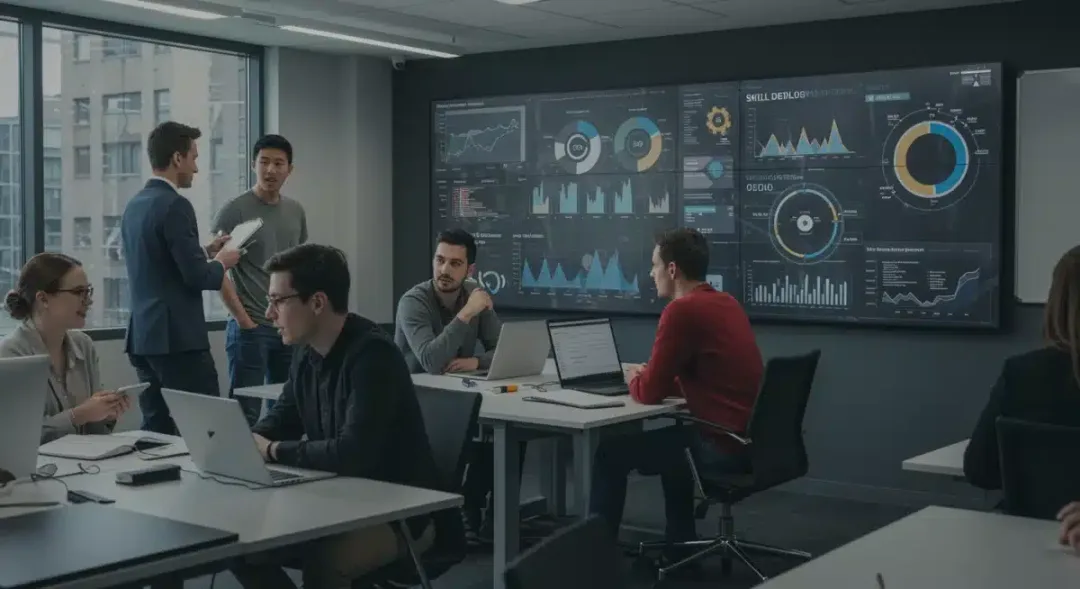
The traditional degree is no longer a guaranteed golden ticket as Skill Gaps in the US Workforce widen under the pressure of rapid automation. By 2026, the disconnect between academic theory and industrial necessity is forcing a radical redesign of the American classroom.
This labor market imbalance isn’t just a corporate headache; it’s a systemic hurdle for millions of professionals. To stay competitive, universities are ditching rigid syllabi for agile, competency-based models that prioritize digital fluency and specialized technical expertise.
Bridging this talent deficit requires more than just new textbooks, it demands a total integration of campus and career. We’re tracking how these educational pivots are reshaping the professional landscape to ensure the next generation of workers remains future-proof.
Understanding the Current Landscape of Skill Gaps
The current state of Skill Gaps in the US Workforce reflects a dynamic interplay of technological advancement, globalization, and demographic shifts.
Industries are increasingly reliant on specialized knowledge and soft skills that are often not adequately addressed by traditional academic programs.
Reports from organizations such as the World Economic Forum and various industry associations consistently highlight deficiencies in areas like data analytics, cybersecurity, advanced manufacturing, and renewable energy.
These gaps are not merely about technical expertise; they also encompass critical thinking, problem-solving, collaboration, and digital literacy.
The urgency to bridge these gaps is amplified by the competitive global economy, where a skilled workforce is a fundamental driver of economic growth and national prosperity. Failure to adapt could result in diminished innovation and a lagging economy.
Emerging In-Demand Skills
- Digital Proficiency: Beyond basic computer literacy, this includes advanced data analysis, cloud computing, AI literacy, and cybersecurity fundamentals.
- Soft Skills: Critical thinking, complex problem-solving, emotional intelligence, communication, and adaptability are increasingly paramount in automated environments.
- Green Skills: Expertise in sustainable practices, renewable energy technologies, and environmental compliance is rapidly becoming essential across many sectors.
- Healthcare Technology: As healthcare digitizes, skills in health informatics, telemedicine platforms, and biomedical engineering are in high demand.
The acceleration of digital transformation across all sectors means that nearly every job now requires some level of technological fluency. This demand extends beyond IT professionals to roles in marketing, human resources, and even traditionally non-technical fields.
Furthermore, the ability to continuously learn and adapt is perhaps the most critical skill of all. The half-life of many technical skills is shrinking, making lifelong learning a necessity for navigating the evolving job market.
Higher Education’s Strategic Response
Higher education institutions are not merely reacting to the Skill Gaps in the US Workforce; they are proactively designing strategies to shape the future workforce.
This involves significant overhauls in curriculum design, faculty training, and program delivery methods to align with industry needs.
Universities and colleges are increasingly engaging with employers to understand their precise skill requirements and integrate these insights directly into their educational offerings.
This collaborative approach ensures that academic programs remain relevant and produce job-ready graduates.
The shift towards more experiential learning, interdisciplinary studies, and competency-based education models that prioritize practical application over rote memorization.
This holistic approach aims to develop well-rounded professionals capable of contributing immediately to the workforce.
Curriculum Innovation and Redesign
- Modular and Stackable Credentials: Offering shorter, focused programs like micro-credentials, certificates, and badges that can be stacked to form larger degrees, providing flexibility for learners and quick upskilling opportunities.
- Interdisciplinary Programs: Creating degree programs that blend disciplines, such as engineering with business analytics or liberal arts with data science, to foster holistic problem-solving skills.
- Project-Based Learning: Incorporating real-world projects and case studies into coursework, often in partnership with industry, to give students practical experience and exposure to workplace challenges.
- Technology Integration: Embedding advanced technologies like AI tools, virtual reality, and specialized software into teaching methodologies and learning environments.
The redesign of curricula is not a one-time event but an ongoing process of adaptation and refinement. Institutions are establishing agile program development cycles to respond quickly to new technologies and emerging job roles, directly addressing the Skill Gaps in the US Workforce.
Furthermore, many institutions are investing in professional development for their faculty to ensure they are up-to-date with the latest industry practices and pedagogical approaches.
This includes training in new technologies and methods for delivering engaging, skills-focused instruction.
Industry Partnerships and Collaborative Models
Addressing the Skill Gaps in the US Workforce effectively requires more than just internal adjustments within academia; it necessitates robust partnerships with industry. These collaborations are proving to be a cornerstone of successful workforce development strategies.
By working closely with businesses, higher education institutions gain invaluable insights into current and future skill demands, allowing them to tailor their programs more precisely.
These partnerships often manifest in various forms, from advisory boards to co-developed curricula and shared resources.
Such collaborative models create a symbiotic relationship where industry provides real-world context and opportunities, while academia supplies the foundational knowledge and research capabilities.
This synergy is critical for bridging the gap between theoretical learning and practical application.
Key Partnership Initiatives
- Advisory Boards: Industry leaders serve on academic advisory boards, providing direct input on curriculum content, technological trends, and employer expectations.
- Co-op and Internship Programs: Structured programs that integrate academic study with practical work experience, giving students hands-on skills and direct exposure to potential employers.
- Applied Research Collaborations: Universities and companies collaborate on research projects, allowing students and faculty to address real-world business challenges and develop innovative solutions.
- Customized Training Programs: Higher education institutions develop bespoke training and upskilling programs for company employees, ensuring their workforce remains competitive and skilled.
These partnerships are not limited to large corporations; many initiatives focus on engaging small and medium-sized enterprises (SMEs) that often lack the resources for internal training.
The success of these collaborative models lies in their ability to create a continuous feedback loop between education and industry.
This ensures that educational offerings remain dynamic and responsive to the rapidly changing demands of the labor market, producing graduates with the skills employers truly need.
The Role of Technology in Bridging Gaps
Technology is not only a driver of Skill Gaps in the US Workforce but also a powerful tool for bridging them. Educational technology (EdTech) is transforming how skills are taught, learned, and assessed, making education more accessible, personalized, and effective.
Online learning platforms, virtual reality (VR), augmented reality (AR), and artificial intelligence (AI) are being leveraged to deliver immersive and engaging educational experiences.
These tools allow for scalable learning solutions that can reach a wider audience and provide tailored instruction.
Furthermore, data analytics is being used to track student progress, identify learning patterns, and continuously improve pedagogical methods. This data-driven approach ensures that educational interventions are precise and impactful, addressing specific skill deficiencies.
Technological Innovations in Learning
- Online Learning and MOOCs: Massive Open Online Courses and specialized online programs provide flexible and accessible pathways for individuals to acquire new skills or reskill.
- Simulations and Virtual Labs: VR and AR technologies create realistic training environments for high-stakes fields like healthcare, engineering, and manufacturing, allowing for safe practice and skill development.
- AI-Powered Tutoring and Personalization: AI algorithms can adapt learning content and pace to individual student needs, providing personalized feedback and targeted support to optimize learning outcomes.
- Digital Badges and Micro-credentials: Blockchain-secured digital credentials offer verifiable proof of specific skill acquisition, making it easier for employers to assess competencies and for individuals to showcase their abilities.
The integration of these technologies is making education more efficient and effective, allowing institutions to address the Skill Gaps in the US Workforce at scale.
They also empower learners to take a more active role in their educational journey, fostering self-directed learning.
The widespread adoption of these tools is also democratizing access to high-quality education, allowing individuals from diverse backgrounds to acquire the skills needed for upward mobility. This is a crucial step towards creating a more equitable and skilled workforce.
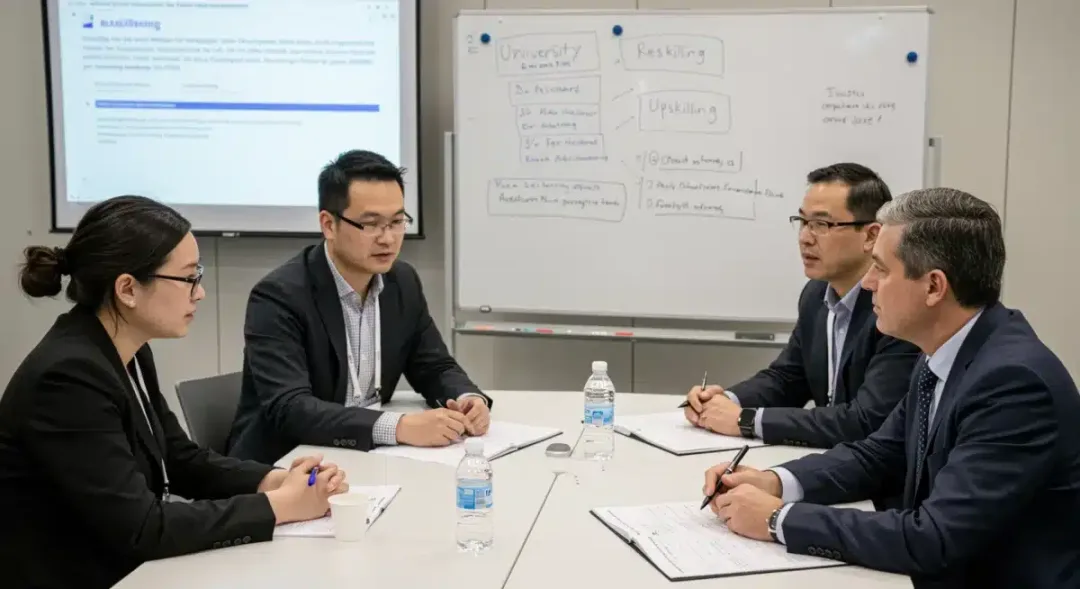
Reskilling and Upskilling Initiatives
Beyond traditional degree programs, higher education is increasingly focusing on reskilling and upskilling initiatives for the existing workforce.
These programs are vital for maintaining the competitiveness of individuals and industries in the face of rapid technological change and evolving job requirements, directly impacting the Skill Gaps in the US Workforce.
Reskilling involves training individuals for entirely new roles, especially those whose current jobs are at risk due to automation. Upskilling, on the other hand, focuses on enhancing existing skills to improve performance in current roles or prepare for advanced responsibilities.
These initiatives are often delivered through flexible formats, such as short courses, bootcamps, and executive education programs, designed to accommodate working professionals. The emphasis is on immediate applicability and measurable skill acquisition.
Flexible Learning Pathways
- Bootcamps: Intensive, short-term programs that provide focused training in high-demand technical skills like coding, data science, or cybersecurity, often leading to immediate employment.
- Continuing Education Units (CEUs): Non-credit courses and workshops designed to update professional knowledge and skills in specific fields.
- Apprenticeships and Work-Based Learning: Programs that combine on-the-job training with classroom instruction, providing a direct pathway to skilled employment.
- Prior Learning Assessment (PLA): Processes that allow individuals to receive academic credit for knowledge and skills gained through work experience or informal learning, accelerating their educational journey.
The development of these flexible pathways is critical for ensuring that individuals can quickly adapt to new demands without committing to lengthy and expensive traditional degree programs.
Many of these programs are developed in close collaboration with employers, ensuring that the training provided is directly relevant to industry needs and leads to tangible career outcomes.
This employer-driven approach enhances the value and effectiveness of reskilling and upskilling efforts.
Funding and Policy Support
Addressing the pervasive Skill Gaps in the US Workforce requires not only institutional innovation but also robust funding and supportive policy frameworks.
Government initiatives, private sector investments, and philanthropic contributions are all crucial for scaling effective solutions.
Federal and state governments are recognizing the economic imperative of a skilled workforce and are increasingly allocating resources towards workforce development programs, grants for educational institutions, and incentives for employer-provided training.
These policies aim to create an ecosystem conducive to continuous learning.
Furthermore, innovative funding models, such as income-share agreements and employer-sponsored tuition benefits, are emerging to make skill development more accessible and affordable for a broader population.
These financial mechanisms alleviate the burden on individuals and encourage participation in upskilling programs.
Government and Private Sector Initiatives
- Workforce Innovation and Opportunity Act (WIOA): Federal legislation providing funding for workforce development programs, career services, and training for dislocated workers and disadvantaged youth.
- State-Funded Grants: Many states offer grants and subsidies to colleges and businesses for developing and delivering training programs in high-demand fields.
- Corporate Partnerships and Sponsorships: Companies invest directly in educational institutions or specific programs to cultivate a talent pipeline tailored to their needs.
- Philanthropic Foundations: Non-profit organizations contribute significant funding to initiatives focused on educational equity, skill development, and career readiness.
Effective policy frameworks also involve streamlining regulatory processes to allow for faster program approval and greater flexibility in curriculum delivery.
This responsiveness is essential for higher education to keep pace with evolving industry demands and address the Skill Gaps in the US Workforce.
The convergence of public and private sector support creates a powerful impetus for change, enabling higher education to implement transformative strategies.
This collective effort is indispensable for building a future-ready workforce that can drive national economic competitiveness.
Anticipated Impact and Future Outlook by 2026
By 2026, the concerted efforts by higher education to address Skill Gaps in the US Workforce are expected to yield significant and tangible results.
The landscape of workforce development will likely be characterized by greater agility, stronger industry alignment, and more diversified learning pathways.
We anticipate a more responsive educational system that continuously integrates feedback from the labor market, ensuring that graduates possess the most current and relevant skills.
This dynamic approach will reduce the time it takes for new skills to be incorporated into academic programs.
The shift towards competency-based learning and micro-credentials will empower individuals to acquire specific, verifiable skills much more efficiently, enhancing their employability and career mobility.
This will lead to a more skilled and adaptable workforce capable of navigating future economic shifts.
Projected Outcomes
- Reduced Unemployment in Key Sectors: A more targeted approach to education will help fill critical vacancies in high-growth industries like technology, healthcare, and advanced manufacturing.
- Increased Workforce Adaptability: Graduates and reskilled workers will possess a stronger foundation in critical thinking, problem-solving, and digital literacy, enabling them to adapt to new technologies and job roles more readily.
- Stronger Economic Competitiveness: A highly skilled workforce will bolster the US economy’s innovation capacity and global competitiveness, attracting investment and fostering new industries.
- Enhanced Career Pathways: More flexible and accessible educational options will create clearer pathways for individuals to advance their careers, leading to greater job satisfaction and earning potential.
While challenges remain, the proactive stance taken by higher education, coupled with robust industry and government support, paints an optimistic picture for the future of the American workforce.
The continuous evolution of educational models will solidify the nation’s human capital advantage.
The ongoing dialogue between educational institutions, employers, and policymakers will be crucial in sustaining this momentum.
By 2026, the goal is to have a robust, resilient, and highly skilled workforce that can meet the demands of an ever-changing global economy and effectively address the Skill Gaps in the US Workforce.
| Key Aspect | Brief Description |
|---|---|
| Current Skill Gaps | Deficiencies in digital, green, and soft skills across various US industries. |
| Higher Ed Adaptation | Curriculum redesign, flexible pathways, and strong industry partnerships. |
| Role of Technology | EdTech tools like AI, VR, and online platforms enhance learning and accessibility. |
| Outlook by 2026 | More agile workforce, reduced unemployment in key sectors, and stronger economy. |
Frequently Asked Questions About Skill Gaps in the US Workforce
What are the primary skill gaps currently affecting the US workforce?▼The US workforce currently faces significant skill gaps in digital literacy, data analytics, cybersecurity, advanced manufacturing, and green technologies. Additionally, soft skills like critical thinking, problem-solving, and adaptability remain crucial deficiencies across many industries, impacting overall productivity and innovation.
How is higher education specifically adapting its curriculum to address these gaps?▼Higher education institutions are adapting by introducing modular and stackable credentials, interdisciplinary programs, and project-based learning. They are also integrating advanced technologies into coursework and collaborating closely with industry to ensure curriculum relevance and equip students with practical, in-demand skills.
What role do industry partnerships play in bridging skill gaps?▼Industry partnerships are vital, providing higher education with real-world insights into employer needs. Collaborations include advisory boards, co-op and internship programs, applied research, and customized training. These partnerships ensure that academic programs are aligned with market demands and create clear pathways to employment.
How will technology impact the future of skill development by 2026?▼By 2026, technology will significantly enhance skill development through online learning, AI-powered personalization, and immersive simulations. EdTech tools will make education more accessible, efficient, and tailored to individual needs, allowing for continuous upskilling and reskilling at a large scale across the US workforce.
What outcomes can be expected from these adaptations by 2026?▼By 2026, these adaptations are expected to lead to a more agile and skilled US workforce, reduced unemployment in critical sectors, and enhanced national economic competitiveness. Individuals will benefit from clearer career pathways and increased employability, fostering a more resilient and adaptable labor market.
Looking Ahead
The ongoing efforts to address Skill Gaps in the US Workforce represent a critical juncture for the nation’s economic future.
The strategic shifts in higher education, coupled with robust industry and government collaboration, are laying the groundwork for a more resilient and competitive workforce.
We anticipate a continuous evolution of educational models, with an increased emphasis on lifelong learning and adaptability.
Monitoring the effectiveness of these new programs and the responsiveness of educational institutions to emerging technologies will be paramount in the coming years.
The success of these initiatives will ultimately determine the US’s capacity to innovate, grow, and maintain its global leadership. A skilled workforce is not merely an economic asset but a fundamental pillar of national prosperity and individual opportunity.