Diversifying US Portfolio 2026: International Equities for 5% Growth
Advertisements
The market report Diversifying US Portfolio 2026: Exploring International Equities for an Additional 5% Growth Potential analyzes cross-border asset allocation for American investors.
This brief outlines how international markets shield portfolios from domestic volatility, explains why this realignment adds 5% to projected yields, and highlights the key geopolitical indicators to monitor next.
The Imperative of Global Diversification for US Investors
The domestic market, while robust, carries inherent risks tied to a single economy. Relying solely on US equities can expose investors to concentration risk, making their portfolios vulnerable to national economic downturns or sector-specific challenges.
Global diversification acts as a hedge against these localized pressures.
By spreading investments across different geographies, investors can tap into varied economic cycles and growth drivers.
This strategy aims to smooth out overall portfolio volatility, as different markets rarely move in perfect sync. The goal is to achieve more consistent returns over the long term.
The landscape for Diversifying US Portfolio 2026 is particularly compelling, given the anticipated shifts in global economic power and technological innovation.
Emerging markets, in particular, are poised for significant expansion, offering growth rates that often outpace developed economies.
Unlocking Growth: Why International Equities Matter
International equities provide access to companies and industries not readily available within the US market.
This broadens the investment universe, allowing for greater selection and potentially higher returns. Many global companies are leaders in their respective sectors, offering unique growth stories.
Moreover, international markets often present different valuation opportunities compared to the US. Investors might find undervalued assets or sectors with higher growth potential abroad, leading to superior capital appreciation.
This valuation arbitrage can significantly contribute to overall portfolio performance.
For investors focused on Diversifying US Portfolio 2026, the pursuit of an additional 5% growth potential necessitates a proactive approach to international markets.
These markets are not just about risk reduction; they are about actively seeking out compelling growth narratives that can enhance overall returns.
Identifying Key International Markets for 2026
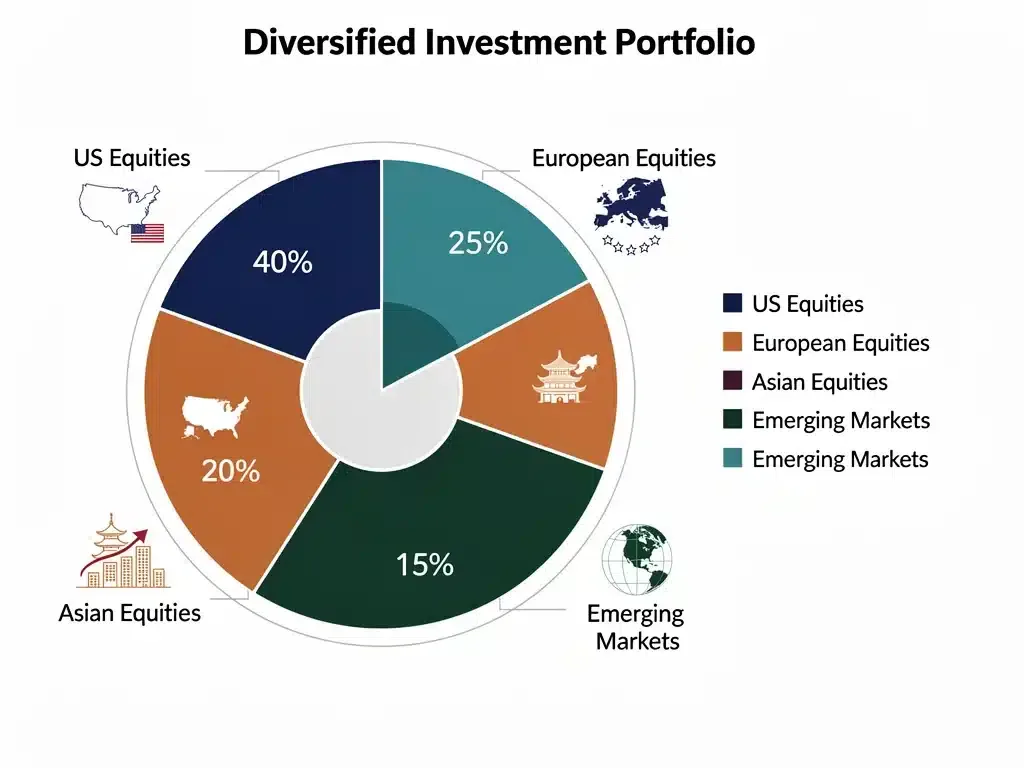
When considering international equities, it’s crucial to differentiate between developed and emerging markets.
Developed markets like Europe and Japan offer stability and established companies, while emerging markets in Asia and Latin America typically provide higher growth potential but also increased volatility.
Each region presents its own set of economic drivers, regulatory environments, and investment opportunities. A well-rounded international allocation should ideally include exposure to both types of markets to balance risk and return.
Researching specific country-level economic forecasts and industry trends becomes essential.
- Developed Markets: Focus on established economies with stable political systems and strong corporate governance.
- Emerging Markets: Target regions with high GDP growth, expanding middle classes, and favorable demographic trends.
- Frontier Markets: Consider these for aggressive growth, acknowledging their higher risk and lower liquidity.
Sector-Specific Opportunities Abroad
Beyond geographical diversification, investors should also consider sector-specific opportunities within international markets. Certain sectors may be more dominant or innovative in particular regions, offering unique investment propositions.
For example, technology in Asia or renewable energy in Europe.
Identifying these leading sectors requires thorough research into global industry trends and competitive landscapes.
Investing in international leaders within these sectors can provide a powerful boost to a portfolio seeking to achieve an additional 5% growth potential. This targeted approach complements broader market diversification efforts.
The goal is to pinpoint areas where international companies excel, leveraging their competitive advantages. This strategic selection is key to effectively Diversifying US Portfolio 2026 and maximizing the benefits of global exposure.
Understanding Risks and Mitigation Strategies
While international equities offer significant advantages, they also come with a unique set of risks that US investors must understand.
Currency fluctuations can impact returns, as can political instability, regulatory changes, and differing accounting standards. These factors necessitate careful consideration and risk management.
Geopolitical events, trade disputes, and sovereign debt issues can also affect international investments. Investors should stay informed about global current affairs and assess how these might impact their overseas holdings.
Proactive monitoring and dynamic adjustments are crucial for navigating these complexities.
Effective risk mitigation strategies are vital for anyone Diversifying US Portfolio 2026. These include thorough due diligence, appropriate asset allocation, and potentially using currency hedging instruments.
A well-thought-out plan can help minimize downside risk while still capturing growth opportunities.
Practical Approaches to International Equity Investing
There are several practical ways for US investors to gain exposure to international equities.
Exchange-Traded Funds (ETFs) and mutual funds offer diversified access to various countries or regions, often with lower expense ratios and greater liquidity than individual stocks. These funds can simplify the process of global diversification.
Investing directly in individual foreign stocks is another option for more sophisticated investors, though it requires extensive research and understanding of foreign markets.
American Depositary Receipts (ADRs) provide a convenient way to buy shares of foreign companies listed on US exchanges, simplifying trading and settlement.
For those aiming for an additional 5% growth potential by Diversifying US Portfolio 2026, a combination of these approaches might be optimal.
Starting with broad-market international ETFs and then selectively adding individual stocks or ADRs can provide a balanced strategy.
Consulting with a financial advisor specializing in international investments is highly recommended to tailor a strategy to individual risk tolerance and financial goals.
The Role of Technology and Innovation in Global Growth
Technology and innovation are powerful drivers of economic growth across the globe, not just in the US.
Many international companies are at the forefront of advancements in AI, biotechnology, renewable energy, and digital transformation. Investing in these global innovators can provide substantial returns.
Regions like Asia, particularly China and South Korea, are leading in areas such as 5G technology, e-commerce, and electric vehicles.
European countries are making significant strides in green technology and advanced manufacturing. Identifying these hubs of innovation is key to capturing future growth.
Including these forward-thinking international companies in a portfolio is a strategic move for Diversifying US Portfolio 2026.
It allows investors to benefit from worldwide technological progress and the economic expansion it fuels, contributing significantly to that desired additional 5% growth potential.
Economic Forecasts and Market Outlook for 2026
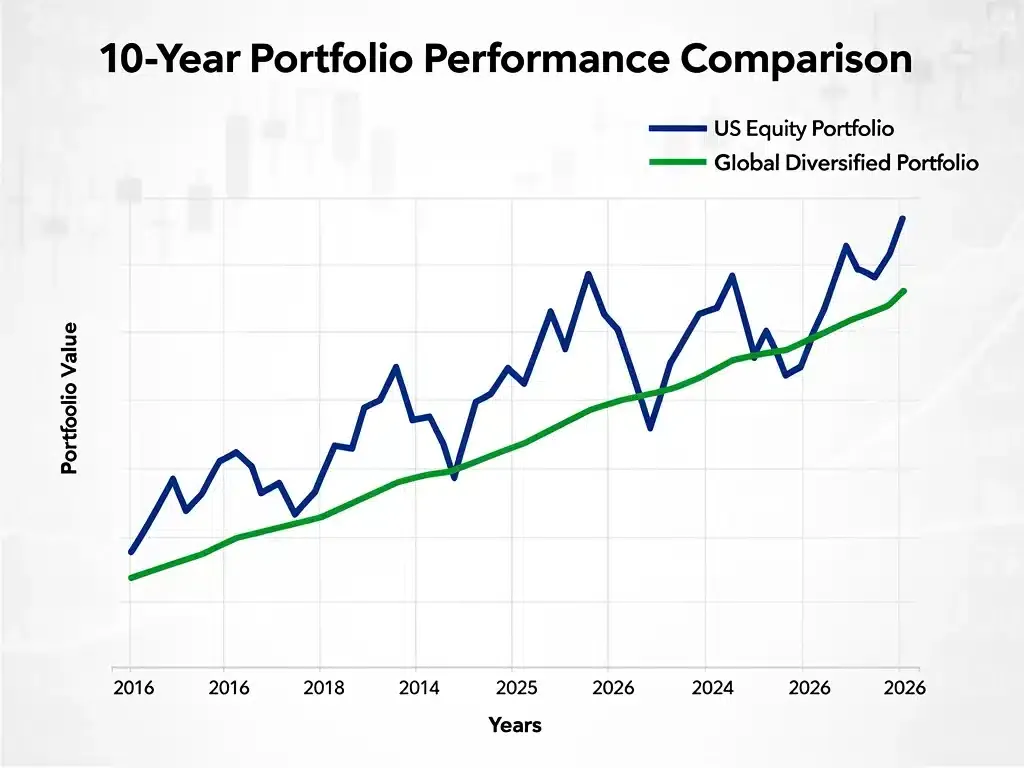
As we look towards 2026, global economic forecasts suggest continued, albeit uneven, growth.
Emerging markets are expected to grow faster than developed economies, driven by demographic shifts, urbanization, and increasing consumer spending. These trends create fertile ground for international equity investments.
However, geopolitical tensions, inflation concerns, and interest rate policies in major economies will continue to influence market dynamics.
Investors must remain agile and adapt their strategies to evolving global conditions. Regularly reviewing economic reports and expert analyses is essential for informed decision-making.
The outlook for Diversifying US Portfolio 2026 remains positive for those willing to embrace a global perspective.
The potential for an additional 5% growth is within reach, provided investors conduct thorough research and maintain a disciplined approach to their international allocations.
Navigating Currency Fluctuations and Geopolitical Events
Currency fluctuations can significantly impact the returns from international investments. A strengthening US dollar can diminish the value of foreign assets when converted back, while a weaker dollar can boost them.
Understanding these dynamics and potentially employing currency hedging strategies can protect returns.
Geopolitical events, from elections to international conflicts, introduce uncertainty and can cause market volatility. Investors need to monitor these developments closely and understand their potential implications for specific regions or sectors.
A diversified international portfolio can help buffer against localized geopolitical shocks.
Successfully Diversifying US Portfolio 2026 requires not only identifying promising markets but also skillfully navigating these external factors.
A robust investment strategy includes contingency plans for various scenarios, ensuring the portfolio remains resilient against unforeseen global events.
| Key Aspect | Brief Description |
|---|---|
| Growth Potential | International equities offer avenues for an additional 5% growth beyond domestic markets. |
| Risk Mitigation | Diversification across geographies reduces concentration risk and market volatility. |
| Market Access | Access to unique industries and companies not present in the US market. |
| Strategic Focus | Essential for investors aiming to enhance returns and strengthen their Diversifying US Portfolio 2026. |
Frequently Asked Questions About International Investing
Why is now a good time for US investors to consider international equities?▼With the US market potentially reaching maturity, international equities offer fresh growth opportunities and diversification benefits. Global economic shifts and emerging market expansion provide compelling reasons to look abroad for enhanced returns and reduced domestic concentration risk, making Diversifying US Portfolio 2026 a timely strategy.
What are the main risks associated with international equity investing?▼Key risks include currency fluctuations, political instability, regulatory changes, and differing accounting standards. Geopolitical events and trade disputes can also impact returns. Investors must conduct thorough research and consider risk mitigation strategies to navigate these complexities effectively when Diversifying US Portfolio 2026.
How can investors gain exposure to international equities?▼Investors can use Exchange-Traded Funds (ETFs) or mutual funds for diversified access to various countries or regions. Direct investment in individual foreign stocks or American Depositary Receipts (ADRs) are also options. These methods facilitate Diversifying US Portfolio 2026 efficiently.
Which international markets offer the best growth potential for 2026?▼Emerging markets in Asia and Latin America typically offer higher growth potential due to demographic shifts and economic expansion. Developed markets like Europe and Japan provide stability. A balanced approach for Diversifying US Portfolio 2026 often includes exposure to both for optimal risk-adjusted returns.
Can international equities truly add an additional 5% growth to a US portfolio?▼Yes, by tapping into faster-growing economies, undervalued assets, and leading international innovators, a well-managed international equity allocation can realistically contribute an additional 5% or more to a US portfolio’s growth. This requires strategic selection and continuous monitoring for successful Diversifying US Portfolio 2026.
Perspectives for a Stronger Portfolio
The strategic move towards Diversifying US Portfolio 2026 by integrating international equities is not merely a trend; it is a fundamental shift in investment philosophy for sustained growth.
The global economic landscape demands a broader perspective, moving beyond traditional domestic confines to capture emerging opportunities.
Investors who proactively embrace this global outlook are better positioned to achieve their financial objectives, including the ambitious target of an additional 5% growth.
As 2026 approaches, market dynamics will continue to evolve, presenting both challenges and opportunities. Staying informed about global economic forecasts, geopolitical developments, and sector-specific innovations will be paramount.
The agility to adjust investment strategies based on these insights will differentiate successful portfolios.
For institutional assistance in designing personalized asset allocation frameworks, rebalancing cross-border equities, and mitigating global currency risks, you can consult the advisory tools and research available through UBS Wealth Management.
Ultimately, the objective of Diversifying US Portfolio 2026 is to build resilience and enhance returns, creating a robust investment framework capable of thriving in an interconnected world.
This proactive approach ensures investors are not just reacting to market changes but are actively shaping their financial future with foresight and strategic planning.