Energy Policy Shift: 2026 Federal Renewable Strategy & Economic Fallout

Advertisements
The 2026 Federal Renewable Strategy represents a monumental energy policy shift, with profound implications for the U.S. economy. This strategy outlines ambitious goals for renewable resource integration, promising both significant economic fallout and unprecedented opportunities across diverse sectors. Understanding its multifaceted impact is essential for stakeholders nationwide.
The federal renewable strategy for 2026, recently unveiled by federal authorities, signals a pivotal moment in the nation’s energy landscape. This comprehensive plan is not merely an environmental initiative; it is an economic blueprint poised to reshape industries, labor markets, and geopolitical standing.
This initiative, dubbed the “Renewable Resources Integration Act of 2026,” details aggressive targets for solar, wind, hydro, and geothermal energy adoption. The anticipated economic fallout from this energy policy shift is a primary focus for analysts and policymakers alike, demanding careful examination of its projected benefits and potential challenges.
The strategy’s unveiling has immediately sparked widespread discussion, with experts weighing in on its feasibility and long-term consequences. As the United States moves towards a cleaner energy future, the practicalities of implementation and the resulting economic ripple effects are becoming clearer.
Understanding the 2026 Federal Renewable Strategy’s Core Tenets
The 2026 federal renewable strategy is built upon several foundational pillars designed to accelerate the transition from fossil fuels to sustainable energy sources. These pillars include significant federal investments, regulatory reforms, and incentives for private sector participation, all aimed at achieving energy independence and reducing carbon emissions.
Central to the strategy is a commitment to electrify major sectors of the economy, including transportation and manufacturing, by leveraging renewable energy. This aggressive push is expected to create a substantial demand for new infrastructure and technological innovations, driving economic growth in nascent industries.
Furthermore, the strategy emphasizes the modernization of the national energy grid to accommodate the influx of intermittent renewable energy sources. This infrastructure overhaul is a critical component, without which the ambitious goals of the federal renewable strategy cannot be fully realized.
Projected Economic Fallout: Winners and Losers in the Energy Transition
The economic fallout from this far-reaching energy policy shift is anticipated to be extensive, creating distinct winners and losers across various economic sectors. Industries aligned with renewable energy production, storage, and distribution are poised for unprecedented growth and investment.
Conversely, sectors heavily reliant on traditional fossil fuels face significant challenges, including potential job losses and stranded assets, necessitating strategic adaptation or diversification. The federal renewable strategy acknowledges these dislocations and includes provisions for workforce retraining and community support programs.
Analysts predict a surge in green jobs, from manufacturing and installation to research and development, offsetting some of the losses in conventional energy sectors. The net effect on employment and regional economies will depend heavily on the effectiveness of these transitional support mechanisms within the federal renewable strategy.
Boom in Renewable Energy Sectors
The solar, wind, and battery storage industries are expected to experience a boom, fueled by federal subsidies, tax credits, and procurement mandates. This will lead to significant capital investment and job creation in these burgeoning fields, driving innovation and technological advancement.
Manufacturing of components for renewable energy systems, such as solar panels, wind turbine blades, and electric vehicle batteries, will see substantial expansion. This localized production is a key objective of the federal renewable strategy, aiming to bolster domestic supply chains and reduce reliance on foreign imports.
- Increased investment in solar panel manufacturing and deployment.
- Expansion of wind farm development both onshore and offshore.
- Growth in battery storage technology and production facilities.
Challenges for Traditional Energy Industries
The coal, oil, and natural gas sectors face an existential threat as the nation pivots towards renewables. Reduced demand, stricter environmental regulations, and shifting investor priorities will necessitate significant restructuring or decline for many companies in these traditional industries.
Job displacement in fossil fuel-dependent regions is a major concern, requiring targeted federal programs to assist affected workers and communities. The transition outlined by the federal renewable strategy is not without its social costs, which policymakers are attempting to mitigate.
Regulatory Framework and Implementation Timeline for the Federal Renewable Strategy
The successful implementation of the 2026 federal renewable strategy hinges on a robust and adaptable regulatory framework. New federal agencies and updated mandates for existing ones will oversee the transition, ensuring compliance, fostering innovation, and managing potential conflicts.
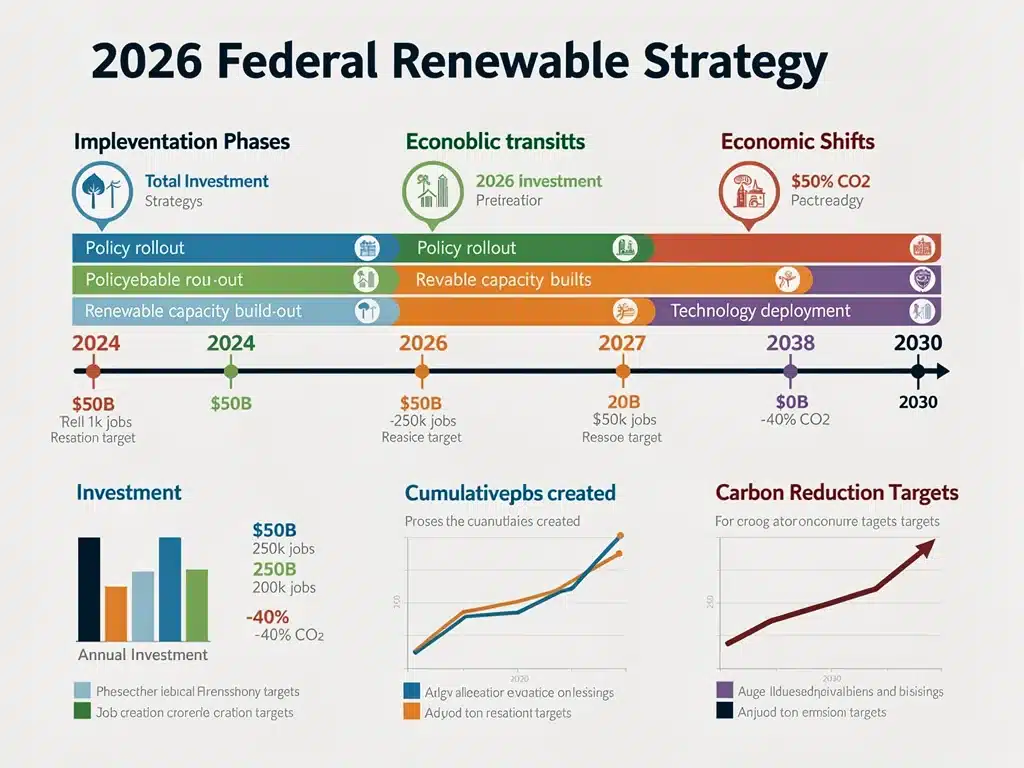
The timeline for implementation is aggressive, with significant milestones set for each year leading up to 2030 and beyond. This phased approach aims to provide clarity and predictability for investors and industries while allowing for adjustments based on technological advancements and market dynamics.
Key legislative actions and executive orders are anticipated to provide the necessary legal backing for the federal renewable strategy. These measures will define the scope of federal authority, establish funding mechanisms, and outline penalties for non-compliance, shaping the energy landscape for decades.
Federal Incentives and Subsidies
A cornerstone of the federal renewable strategy involves a suite of financial incentives designed to accelerate renewable energy adoption. These include expanded tax credits for renewable energy projects, grants for research and development, and low-interest loans for businesses investing in green technologies.
These incentives aim to reduce the upfront costs of renewable energy projects, making them more competitive with traditional energy sources. The goal is to stimulate private investment and drive down the cost of clean energy, ultimately benefiting consumers and the broader economy.
- Enhanced tax credits for solar and wind energy production.
- Grants for innovative renewable energy research.
- Low-interest loans for green technology deployment.
Permitting and Infrastructure Streamlining
The federal renewable strategy also addresses the often-complex and time-consuming permitting processes for new energy infrastructure. Efforts to streamline these procedures are underway, aiming to accelerate the construction of renewable energy facilities and transmission lines.
This streamlining is crucial for meeting the ambitious deployment targets set by the strategy, as delays in permitting can significantly hinder project development. The federal government is working with state and local authorities to harmonize regulations and expedite approvals.
Impact on Energy Prices and Consumer Costs
The economic fallout from the federal renewable strategy will inevitably influence energy prices and consumer costs. While the long-term goal is to provide cheaper, more stable energy, the transition period may present fluctuations and initial increases in some areas.
Investment in new infrastructure and technologies will require substantial capital, which could initially be passed on to consumers through various charges. However, as renewable energy technologies mature and economies of scale are achieved, prices are expected to stabilize and potentially decrease.
Federal programs are also being designed to protect vulnerable populations from potential energy price spikes during the transition. These measures are critical to ensuring an equitable energy transition and maintaining public support for the federal renewable strategy.
Geopolitical Implications and Energy Independence
Beyond domestic economic considerations, the 2026 federal renewable strategy carries significant geopolitical implications, particularly concerning energy independence. Reducing reliance on foreign oil and gas sources enhances national security and provides greater control over energy supply.
The U.S. aims to become a leader in renewable energy technology and export, positioning itself as a key player in the global green economy. This shift could reshape international energy markets and alliances, with the federal renewable strategy at its core.
This move towards energy independence also reduces exposure to volatile global energy markets and geopolitical instabilities. The federal renewable strategy is a strategic move to secure America’s energy future and bolster its influence on the world stage.
Innovation and Technological Advancements Driven by the Federal Renewable Strategy
The ambitious goals of the federal renewable strategy are a powerful catalyst for innovation and technological advancements across various fields. Significant investments in research and development are anticipated, leading to breakthroughs in energy generation, storage, and efficiency.
Emerging technologies such as advanced geothermal systems, next-generation biofuels, and carbon capture utilization and storage (CCUS) will receive increased funding and support. These innovations are crucial for addressing the remaining challenges in achieving a fully renewable energy system.
The federal renewable strategy is fostering a vibrant ecosystem of startups, academic institutions, and established companies collaborating on groundbreaking solutions. This collaborative environment is essential for pushing the boundaries of what is possible in clean energy.

Smart Grid Technologies and Energy Storage
The modernization of the electrical grid is paramount, focusing on smart grid technologies that can efficiently manage intermittent renewable energy. This includes advanced sensors, artificial intelligence, and automated control systems to ensure grid stability and reliability.
Energy storage solutions, particularly battery technology, are critical for balancing supply and demand from renewables. Research into more efficient, cost-effective, and environmentally friendly battery chemistries is a key area of focus under the federal renewable strategy.
- Development of advanced smart grid infrastructure.
- Research into novel and efficient energy storage solutions.
- Integration of AI and machine learning for grid optimization.
Environmental Benefits and Climate Change Mitigation
Perhaps the most widely recognized benefit of the federal renewable strategy is its profound environmental impact, particularly in mitigating climate change. The transition to renewable resources will significantly reduce greenhouse gas emissions, improving air quality and protecting ecosystems.
By phasing out fossil fuels, the strategy aims to curb air pollution, which has direct positive health outcomes for communities across the nation. This cleaner environment is a direct result of the energy policy shift and a core objective of the federal renewable strategy.
The long-term environmental dividends, including biodiversity preservation and reduced extreme weather events, underscore the urgency and importance of this strategic energy transition. The federal renewable strategy is a crucial step towards a sustainable future for the planet.
Public Acceptance and Community Engagement in the Federal Renewable Strategy
The success of the federal renewable strategy is not solely dependent on technological advancements and economic incentives; public acceptance and robust community engagement are equally vital. Local communities play a critical role in the siting of new renewable energy projects and infrastructure.
Addressing concerns about land use, visual impact, and potential disruptions is crucial for fostering local support. Transparent communication and inclusive decision-making processes are essential to build trust and ensure the equitable distribution of benefits and burdens from the federal renewable strategy.
Educational campaigns and community benefit agreements are part of the broader effort to ensure that the federal renewable strategy is implemented with the full support of the American populace. This collaborative approach is designed to overcome resistance and accelerate progress.
| Key Point | Brief Description |
|---|---|
| Policy Shift | Aggressive federal move towards renewable energy dominance by 2026. |
| Economic Fallout | Significant growth in green sectors; challenges for fossil fuel industries. |
| Implementation | Phased timeline with regulatory reforms and financial incentives. |
| Future Outlook | Enhanced energy independence, technological innovation, and climate benefits. |
Frequently Asked Questions About the 2026 Federal Renewable Strategy
The primary goal is to significantly increase the share of renewable energy in the national grid and economy by 2026, aiming for greater energy independence, reduced carbon emissions, and job creation in green sectors. This comprehensive federal renewable strategy seeks to transform the U.S. energy landscape.
Initially, there might be some fluctuations due to infrastructure investments. However, the long-term projection is for more stable and potentially lower energy costs as renewable technologies become more efficient and widely adopted, a key aim of the federal renewable strategy.
Industries involved in solar, wind, battery storage, smart grid technologies, and electric vehicle manufacturing are poised for significant growth. These sectors will see increased investment, innovation, and job creation as part of the federal renewable strategy.
The strategy includes provisions for workforce retraining, education programs, and community support initiatives aimed at transitioning workers from fossil fuel industries into new green jobs. This ensures an equitable transition under the federal renewable strategy.
The strategy prioritizes significant investments in modernizing the national grid with smart technologies and advanced energy storage solutions. This ensures stability and reliability as intermittent renewable sources are integrated, a crucial element of the federal renewable strategy’s success.
Looking Ahead: The Future of the Federal Renewable Strategy
The 2026 federal renewable strategy represents more than just a policy change; it signifies a fundamental reorientation of the nation’s economic and environmental priorities. The journey ahead will undoubtedly involve challenges, but the long-term vision of a sustainable, energy-independent future remains clear.
Stakeholders across all sectors must remain vigilant, adapting to the evolving landscape and seizing the opportunities presented by this monumental shift. The federal renewable strategy will continue to shape discussions and decisions at local, state, and national levels, demanding ongoing engagement and innovation.
Monitoring the implementation, evaluating the economic fallout, and fostering technological advancements will be critical in realizing the full potential of this ambitious plan. The success of the federal renewable strategy will ultimately define America’s role in the global clean energy transition for decades to come.